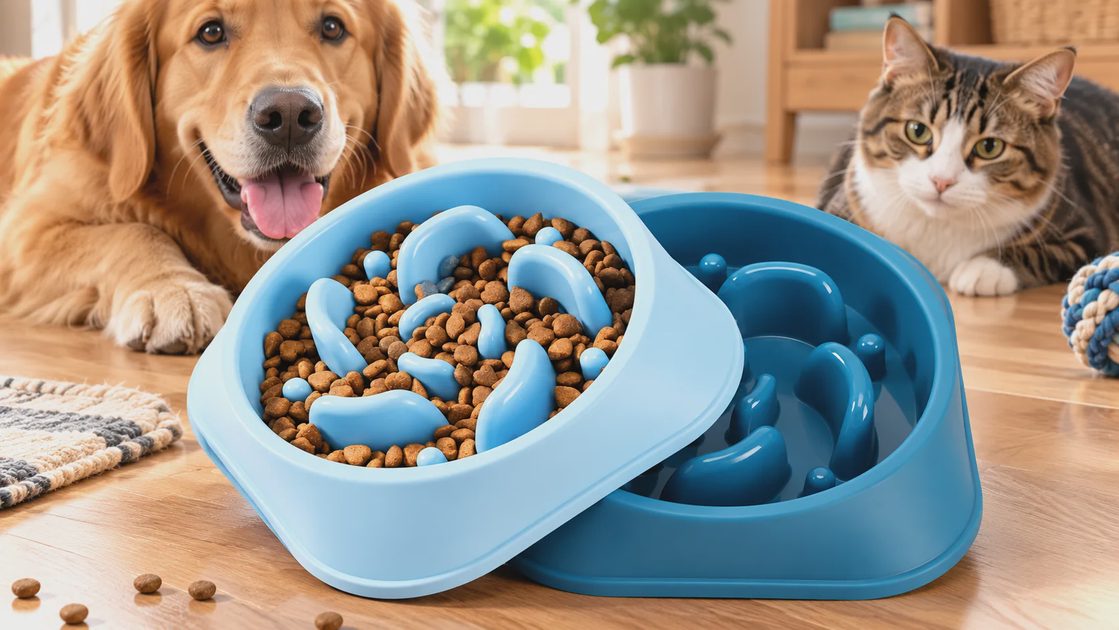
Affiliate disclosure: This post contains affiliate links. If you buy through them, Clear Pet Table may earn a small commission at no extra cost to you. As an Amazon Associate, we earn from qualifying purchases.
By Claire Whitaker | Feeding Table | Updated September 24, 2026
Quick verdict: At about $9 for two bowls and roughly 4.6 stars from nearly 9,000 ratings, this is an easy, low-risk slow feeder for small-to-medium dogs who gulp kibble. Skip it if you have a giant breed or a cat.
Best for: small-to-medium fast eaters on dry food
Watch out for: sliding on slick floors
Good to know: slow feeders are often marketed as "bloat stoppers," but no bowl can promise that. See the safety section below.
Dog Eats Too Fast? What a Slow Feeder Bowl Can and Can't Do
In the clinic, I heard some version of "He inhales his food" almost every week. Owners weren't worried about speed itself. They were worried about the gagging, the occasional bring-it-back-up moment, and the soft stool that seemed to follow a rushed meal. This is more common than people think.
Dogs bolt food for many reasons: competition from another pet, a history of scarce meals, sheer excitement, or plain habit. Most of the time it's behavior, not a sign that something is wrong.
The other complaint was cost. Plenty of owners paid a premium for a fancy bowl, only to watch it skid across the floor or get solved in a few days.
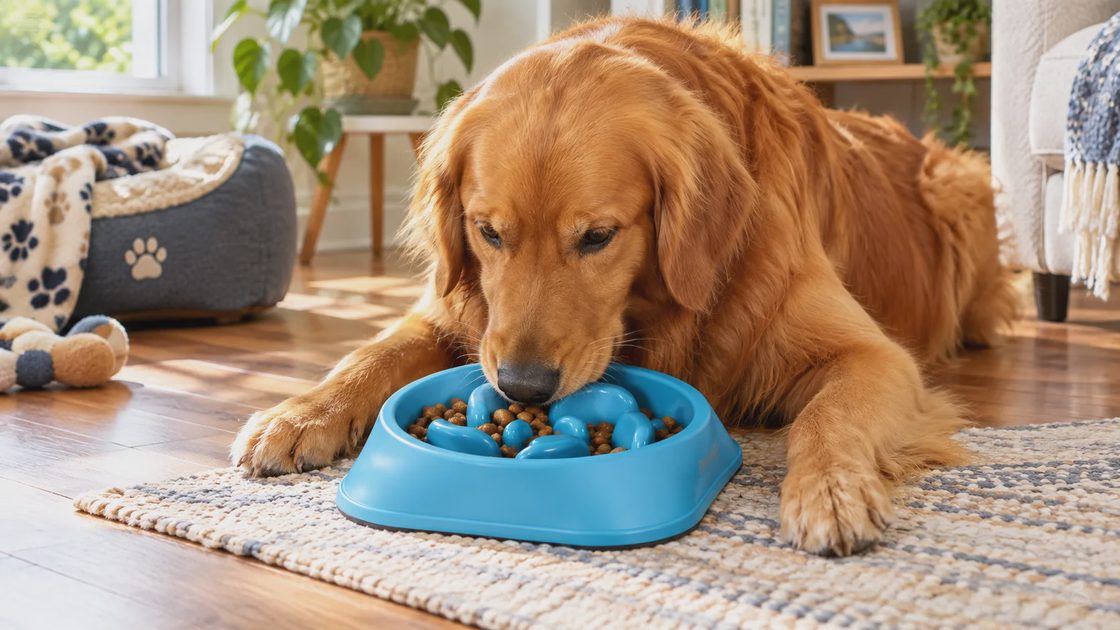
Let's make this make sense: do slow feeder bowls work? Raised ridges force a dog to eat around obstacles, which tends to stretch out mealtime and cut down on big gulps. A bowl can't treat a medical problem, but pace is one of the gentlest things to change first, and it rarely means switching food. For the wider category question, see my guide to whether slow feeders are worth buying.
What You Get in the MateeyLife Slow Feeder Bowl 2-Pack
Here's what the listing offers:
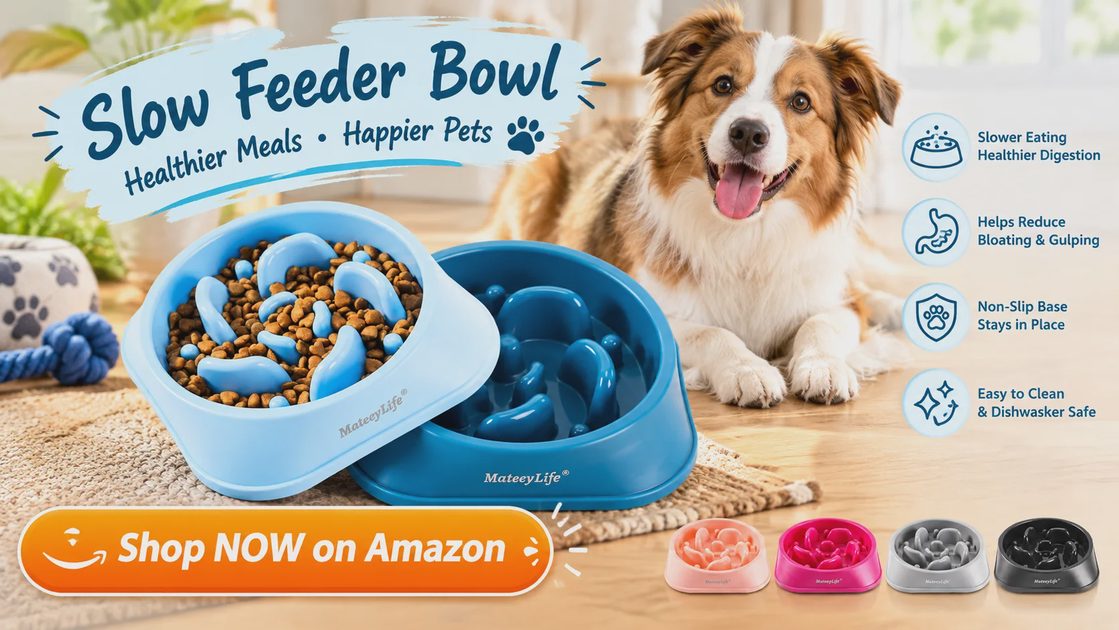
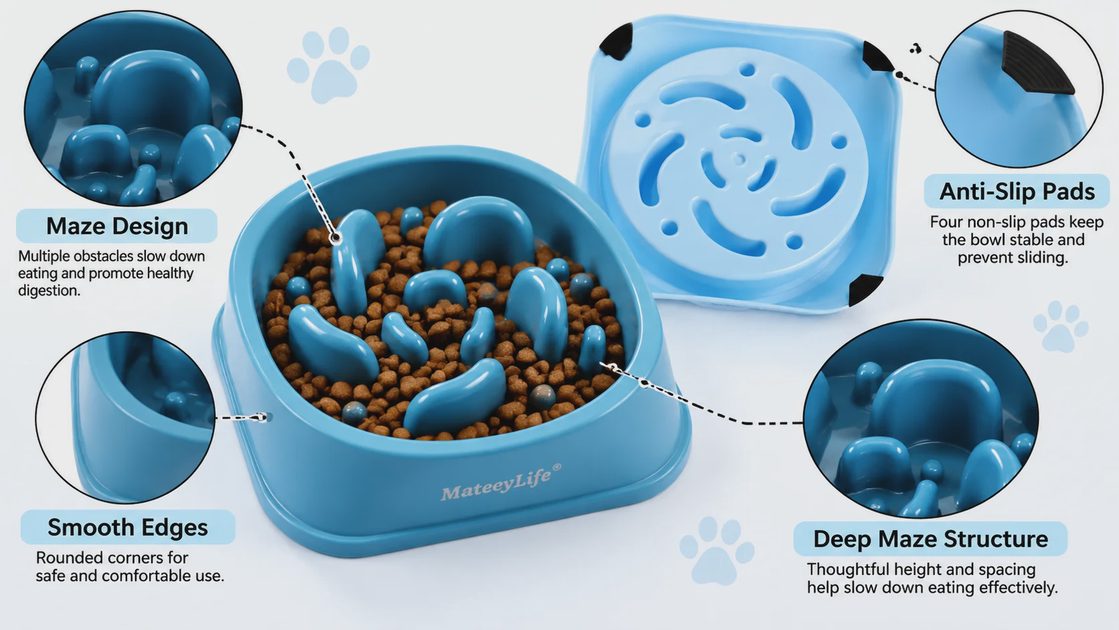
Maze design with low ridges and wide gaps, so a tongue can reach the kibble without the bowl becoming a frustration. The maker claims meals can last up to ten times longer. I'd read that as a ceiling; a calmer, slower meal is the realistic goal.
Two bowls per pack: one for daily use, one to rotate through the dishwasher or hand to a second pet.
A non-slip base with rubber feet, meant to keep the bowl planted.
Food-contact-safe polypropylene that's top-rack dishwasher safe.
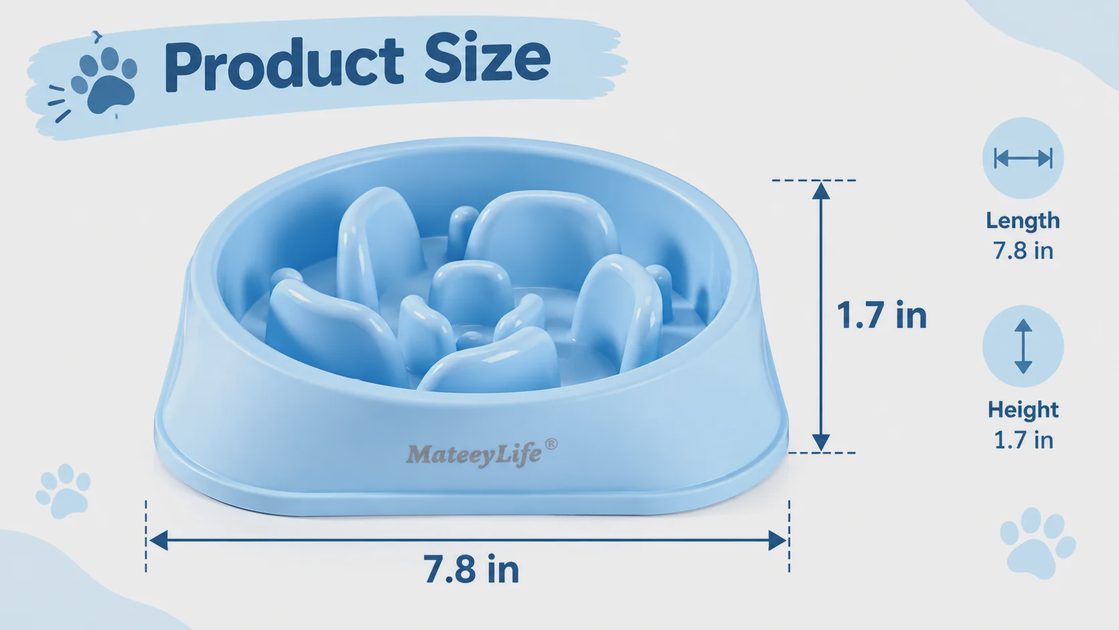
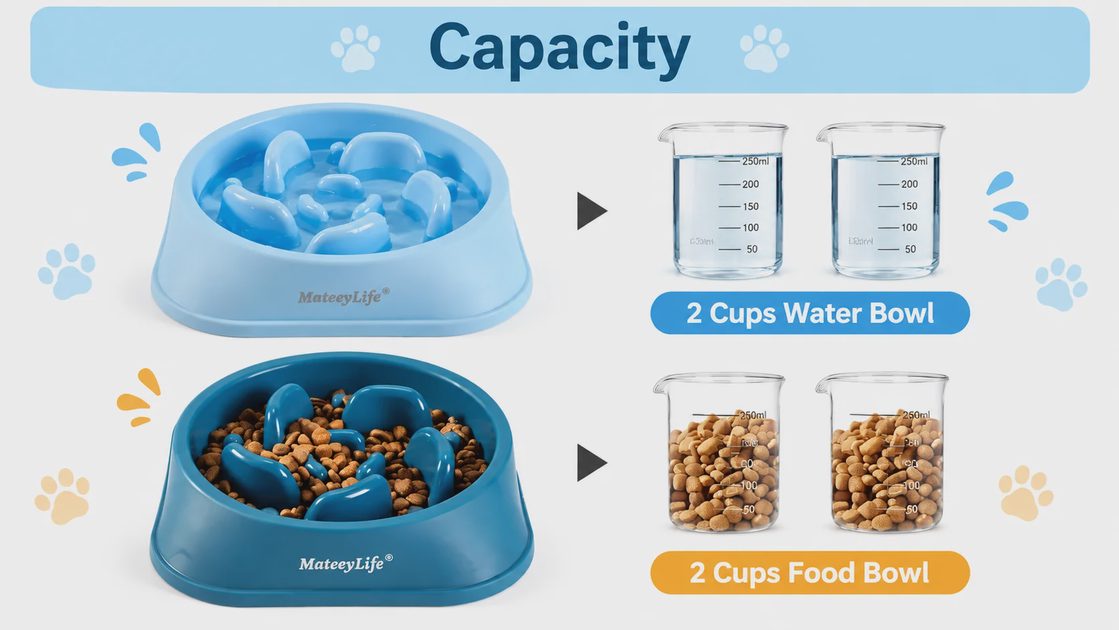
About 7.9 inches wide and 1.6 inches tall, holding roughly 2 cups of dry kibble.
What Owners Say: Ratings and Real Complaints
The bowls hold about 4.6 stars across nearly 9,000 ratings and have ranked near the top of Amazon's dog slow feeder category. I read through the feedback for patterns instead of one-off raves. A 4.6 doesn't mean every dog loved it. The complaints I found mostly trace back to bowl size and floor grip, the two things you can check before you buy.
The strongest theme is durability and cleanup: bowls that survive daily washing and feel sturdier than the price suggests. Value comes up next, since two bowls cost less than one from many name brands. Several owners also say the maze is challenging without being fiddly, and that dogs adjust within a few meals.
The complaints are just as consistent. On slick tile or hardwood, a determined eater can still nudge the bowl along, so the happiest owners tend to put a feeding mat underneath. A few owners with strong chewers also warn that this is a feeding tool, not a toy, so pick it up between meals if your dog likes to tear at things. Size and cat questions get their own answers below.
What to Look for in Any Slow Feeder for Dogs
Whether you pick this one or another, a few checks separate a useful slow feeder from a frustrating one:
Capacity: measure your dog's usual meal in cups, then choose a bowl that holds at least that much.
Ridge height and gaps: too tall or tight and a dog gives up; too low and the puzzle is solved in a minute.
Grip: rubber feet or a weighted base keep the bowl from becoming a hockey puck on hard floors.
Material: plastic is light and cheap, ceramic is heavier and steadier, and stainless is long-lasting. Pick for your dog's habits, not looks.
Cleaning: deep grooves trap food, so a dishwasher-safe bowl saves real time.
Who Should Buy It (and Who Shouldn't)
If you're hunting for the best slow feeder for dogs, the honest answer is that it depends on your dog. Run through this quick check:
Small-to-medium dog who gulps dry kibble? This is the sweet spot. Add a mat if your floors are slick.
Large or giant dog, or meals bigger than 2 cups? Skip the 2-cup size. MateeyLife lists a separate 4-cup version, and please read the bloat section below first.
Strong chewer who shreds dishes? Skip the plastic. A sturdier ceramic or stainless option is the better bet.
Flat-faced breed, like a Pug or Bulldog? Raised ridges can be awkward for short muzzles. Watch the first meals closely, and ask your vet if the bowl seems to frustrate your dog.
A cat? Different bowl entirely. See the next section.
A dog who already eats at a calm pace? You don't need one. Save your money.
Can Cats Use a Dog Slow Feeder Bowl?
Short answer: not this one. Owners report the maze is too deep for most cats, and tall walls can press against whiskers, which many cats dislike.
Cats who eat too fast and then vomit are common, and a shallow cat slow feeder is the better tool. MateeyLife makes a separate silicone version that's about 6.3 inches wide and under an inch tall, listed for both dry and wet food. If your cat's real issue is hunger rather than speed, my guide to wet versus dry food for cats is the better place to start.
MateeyLife vs. Other Slow Feeder Bowls: Price Compared
The price is where this bowl earns its place. As of September 24, 2026, the 2-pack lists at $8.99, or about $4.50 per bowl. Here's how that compares with popular alternatives:
Option | Approx. price | Material | Good for | Trade-off |
|---|---|---|---|---|
Outward Hound Fun Feeder Slo Bowl (single) | Roughly mid-teens per bowl | Plastic | Buyers who want a well-known brand | About three times the cost per bowl |
Ceramic slow feeders (e.g., LE TAUCI, Havniva) | Roughly $15 to $25 per bowl | Ceramic | Heavier, steadier setups | Costlier; ceramic can chip |
Stainless steel slow feeders (e.g., Feedoo) | Often $20 and up | Stainless steel | Long-lasting daily use | Priciest per bowl |
Competitor prices are approximate and change often. Check current listings.
At $4.50 a bowl, you can test whether pace matters for your dog for about the price of a coffee.
Bloat and Slow Feeders: What You Should Actually Know
Here's the honest version. Bloat is a real emergency, but no bowl has been proven to prevent it.
Vets call it gastric dilatation-volvulus, or GDV. The stomach fills with gas and can twist, which is life-threatening, and it's most common in large, deep-chested breeds. Fast eating and swallowing air are among the factors vets discuss, along with breed and chest shape, so slowing meals is a sensible habit. It just isn't a guarantee.
Know the warning signs: a swollen or tight belly, retching with nothing coming up, heavy drooling, restlessness or pacing, and rapid breathing. If you see them, go to an emergency vet immediately instead of waiting to see if it passes.
If you own a deep-chested large breed, ask your vet about your dog's individual risk, including whether a preventive surgery called gastropexy makes sense. Many vets also suggest keeping the hour after meals calm. A slow feeder can be one small part of the plan, never the whole plan.
How to Get the Most Out of a Slow Feeder Bowl
Keep your dog's normal portion. Don't add extra to make the bowl "worth it."
Rinse it soon after meals. Dried food is harder to clear from the grooves.
Run a one-week pace test. Time a normal meal before you start, then time it again after a week. A simple before-and-after number shows whether the bowl is doing anything for your dog.
Feed at consistent times in a calm spot. A slow feeder works best when mealtime isn't also a race against another pet.
Change one thing at a time. If you're planning to switch dog food, stagger it with the new bowl so you can tell what's helping. If soft stool keeps showing up, my guide to a sensitive stomach in dogs is a good next read.
Not every symptom means an emergency, but some do deserve a closer look. If your dog vomiting keeps happening, that guide walks through when to wait and when to call.
Bottom line: if you have a small-to-medium fast eater on dry food, this is a sensible, affordable place to start; if you have a giant breed, a cat, or a serious chewer, choose a different bowl.
Frequently Asked Questions
Can it be used for wet food?
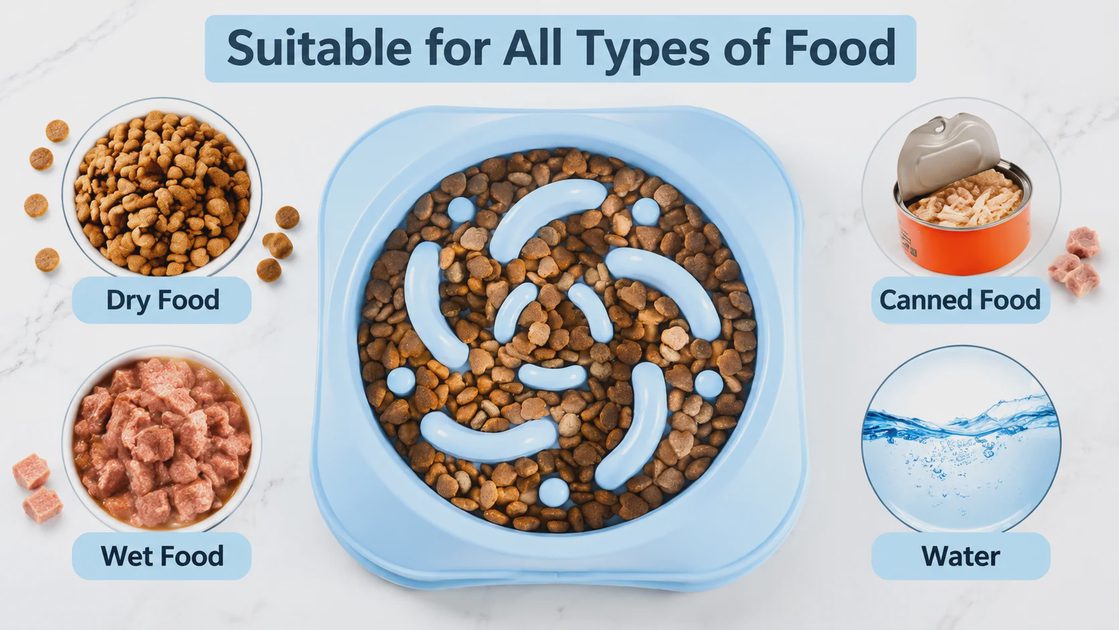
Yes. The listing says it suits dry, wet, and raw diets. Spread wet food thinly across the ridges instead of mounding it, and soak the bowl for a few minutes before washing so the grooves clear easily.
Does it help with digestion?
It slows the pace of a meal, and for some dogs that means less gulping and fewer rushed-meal tummy troubles. It isn't a treatment for any condition, though. If soft stool, vomiting, or gas keeps returning even at a slower pace, bring notes to your vet instead of waiting it out.
How long until my dog gets used to it?
Owners commonly report an adjustment of a few meals. If your dog seems suspicious, sprinkle a few kibbles on top of the ridges at first and feed at the usual time, when hunger is on your side. If frustration turns into flipping or chewing, stop and reassess.
Should I choose a slow feeder bowl or a lick mat?
They solve slightly different problems. A maze bowl is built for everyday meals and fits into a normal feeding routine, while a lick mat works better as an occasional calming activity or for spreadable treats. Many households end up using both for different moments.
Can puppies use it?
Many owners use slow feeders with puppies who gulp. Supervise closely, and ask your vet about portion sizes as your puppy grows, since needs change quickly.
How often should I replace it?
Retire it when it cracks, gets deeply scratched, or has been chewed. Scratches are harder to clean, and cracked edges can be sharp. Owners often describe the plastic as durable, but give it a quick check every few weeks.
How fast will it ship, and can I return it?
The estimated delivery date shows on the listing and at checkout, based on your ZIP code, and Prime-eligible orders usually arrive faster. Without Prime, similar listings have required a minimum order for free shipping, so check before adding it to your cart. Return terms depend on the seller, so read that line on the page too.


From readers
Letters
No letters yet.
Be the first to write in. We read everything that arrives, and we answer most of it.