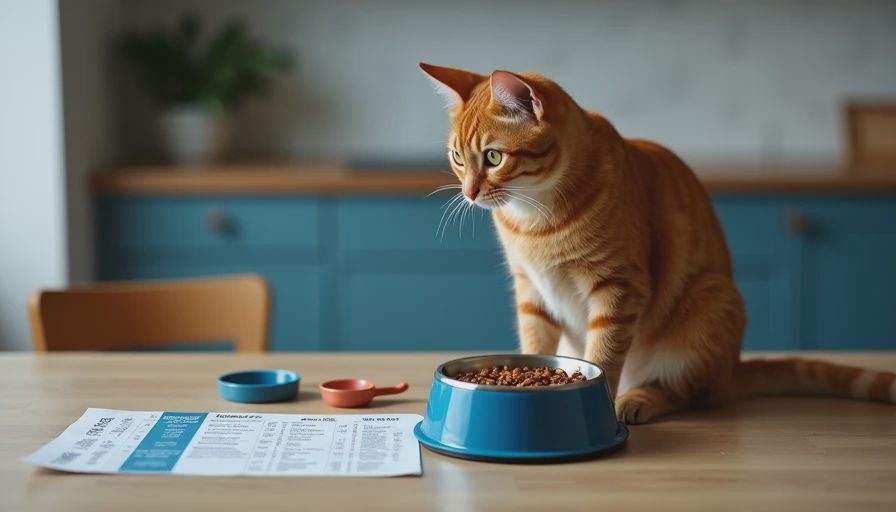
If you have searched “how much should i feed my cat,” you are in very good company. Cat food labels can offer a starting point, but they cannot account for every cat’s age, activity level, body shape, health history, or preferred sleeping schedule. The right portion for a 9-pound indoor adult cat can be very different from the right portion for a growing kitten or an active 14-pound cat. Let’s make this make sense with a simple approach you can use at home.
Start with calories, not just cups
The most useful first step is finding the calorie content of your cat’s food. Look for “kcal per cup,” “kcal per can,” or “kcal per pouch” on the label. A dry food can contain roughly 350 to 500 calories per cup, while a 3-ounce wet food can often contain about 70 to 120 calories. Those are broad examples, not universal rules, so read the actual package.
A typical 10-pound adult cat might need somewhere around 200 to 250 calories per day, but individual needs can fall outside that range. A young, energetic cat may need more. A quiet indoor cat who naps most of the day may need less. A cat recovering from illness, living with diabetes, or carrying excess weight needs a plan made with a veterinarian rather than a quick internet formula.
For example, if your cat needs 220 calories daily and the dry food contains 440 calories per cup, the starting portion is one-half cup per day. If you feed two meals, that equals one-quarter cup at breakfast and one-quarter cup at dinner. A measuring cup designed for small portions is more reliable than estimating with a large kitchen scoop.
When asking how much should i feed my cat, remember that the package feeding chart is usually based on weight ranges. It may be generous for a sedentary indoor cat, and it may not include calories from treats, toppers, or food used to give medication.

Consider your cat’s age and lifestyle
Kittens need frequent access to energy because they are growing rapidly. Kittens younger than six months often do well with three or four meals daily, while older kittens may transition to two or three meals. Kitten food is more calorie-dense and nutritionally designed for growth, so replacing it with adult food too early is not ideal.
Adult cats can usually eat two measured meals per day. Some do better with three smaller meals, especially if they beg between meals or vomit after eating too quickly. An automatic feeder can help a busy household divide a daily portion into breakfast, afternoon food, and an evening meal. It can also reduce the temptation to refill the bowl every time your cat complains.
Senior cats are not automatically less hungry. Some become less active, while others lose weight because of dental disease, kidney disease, hyperthyroidism, or another medical problem. A sudden increase in appetite, increased thirst, repeated vomiting, or unexplained weight loss deserves a veterinary appointment.
Indoor cats commonly need fewer calories than highly active outdoor cats, but “indoor” does not mean every cat needs the same amount. A large-framed cat who plays hard may need more than a smaller cat who sleeps most of the day. Body condition and weight trends matter more than the label on the lifestyle category.
Use body condition to adjust the portion
A scale is helpful, but body condition gives you more information. In a cat at a healthy weight, you should be able to feel the ribs under a thin layer of fat without pressing firmly. Looking from above, there should be a gentle waist behind the ribs. From the side, the abdomen should rise slightly toward the back legs. A swinging belly pouch can be normal, especially in adult cats, and does not automatically mean obesity.
If you cannot easily feel the ribs, the portion may be too large, treats may be adding more calories than expected, or activity may be too low. Do not make a dramatic cut overnight. Reduce the daily amount gradually, often by about 5 to 10 percent, then reassess weight and hunger over several weeks. Cats should not be placed on a crash diet because rapid weight loss can contribute to serious liver problems.
If your cat appears thin, has a prominent spine or hips, or is losing weight despite eating normally, do not simply add unlimited food. Dental pain, intestinal disease, thyroid disease, and other conditions can affect weight. A veterinarian can recommend a safe calorie target and identify the reason for the change.
Many owners asking how much should i feed my cat are surprised that a few extra treats can change the picture. A creamy lickable treat, small pieces of chicken, and dental snacks all count. For a 10-pound cat, treats are best kept to a small portion of daily calories, often around 10 percent or less.
Wet food, dry food, and mixed feeding
Wet food provides substantial moisture and can be useful for cats who drink very little. Dry food is convenient, easy to measure, and often works well in puzzle feeders. Neither format is automatically perfect for every cat. The important questions are whether the food is complete and balanced for your cat’s life stage, whether the portion fits calorie needs, and whether your cat maintains a healthy body condition.
For mixed feeding, add calories from both foods before deciding on portions. Suppose a cat’s daily target is 220 calories. One 3-ounce can provides 90 calories, leaving 130 calories for dry food. If the kibble contains 400 calories per cup, 130 calories equals about one-third cup. The exact amount should come from the labels, not a standard wet-to-dry conversion.
Food puzzles and slow feeders can make dry meals more interesting, but do not hide the entire daily ration in a puzzle if another family member might also feed the cat. Writing the daily amount on a note near the food storage area prevents accidental double meals.
Build a feeding routine that works
A practical routine begins with weighing your cat, checking the food’s calorie statement, and measuring the total daily amount. Divide that amount into meals, then record treats separately. Recheck your cat’s weight every two to four weeks while you are adjusting portions. Small changes are easier to spot on a scale than by looking at your cat each day.
If you have been free-feeding, switch gradually. Measure what your cat eats over a normal day, then offer that amount at set times. Some cats adapt in a few days; others need a week or two. Feed separate cats in different rooms if one steals food. This is especially important when one cat needs a prescription diet or weight-management plan.
When deciding how much should i feed my cat, use the label as a starting point, calories as the math, and body condition as the feedback. If your cat is gaining or losing weight, adjust thoughtfully rather than reacting to one hungry afternoon. Before you switch foods, pause and check these three things: calorie density, total treats, and recent weight.
When to ask your veterinarian
A routine question about portions becomes a medical question when appetite or weight changes suddenly. Call your veterinarian if your cat stops eating, vomits repeatedly, has persistent diarrhea, drinks and urinates much more than usual, or loses weight without an obvious reason. Cats that eat very little for more than a day can become seriously ill, particularly if they are overweight.
Bring the food package, a list of treats, and a few days of feeding notes to the appointment. Include the amount offered, the amount left behind, and any changes in stool or behavior. This information can help the veterinary team recommend a realistic plan instead of guessing.
There is no single answer to how much should i feed my cat that fits every household. A measured portion, a consistent schedule, regular weight checks, and calm adjustments will get you much closer than filling the bowl whenever it looks empty. Your cat does not need a perfect routine; your cat needs a thoughtful one that you can follow every day.

From readers
Letters
No letters yet.
Be the first to write in. We read everything that arrives, and we answer most of it.