Learning how to switch dog food can feel more complicated than it should. There are ingredient lists to compare, feeding charts to interpret, and plenty of online opinions about the “best” bowl. The reassuring truth is that most healthy dogs can change foods successfully when the transition is gradual and the new diet fits their age, size, activity, and health needs. Let’s make this make sense with a practical plan you can use at home.
Before you switch, check the reason
Start by asking why you want to change your dog’s food. A new puppy may need to move from a growth formula to an adult diet. An adult dog might need fewer calories after gaining weight, or a senior dog may benefit from a food designed for a different activity level. Sometimes the reason is simple: the current product is unavailable, your budget changed, or your dog refuses to eat it.
If your veterinarian recommended a prescription diet for kidney disease, urinary problems, food allergies, or another diagnosed condition, follow that plan rather than making a casual swap. Prescription foods are formulated for specific medical purposes. Also pause before switching if your dog is vomiting repeatedly, has bloody diarrhea, seems unusually weak, or refuses water. Those signs deserve veterinary advice instead of a food experiment.
Compare the guaranteed analysis, calorie information, life-stage statement, and feeding directions on both bags. Ingredients matter, but they are only one part of the picture. A food with a familiar-looking ingredient list is not automatically a better match for your dog.
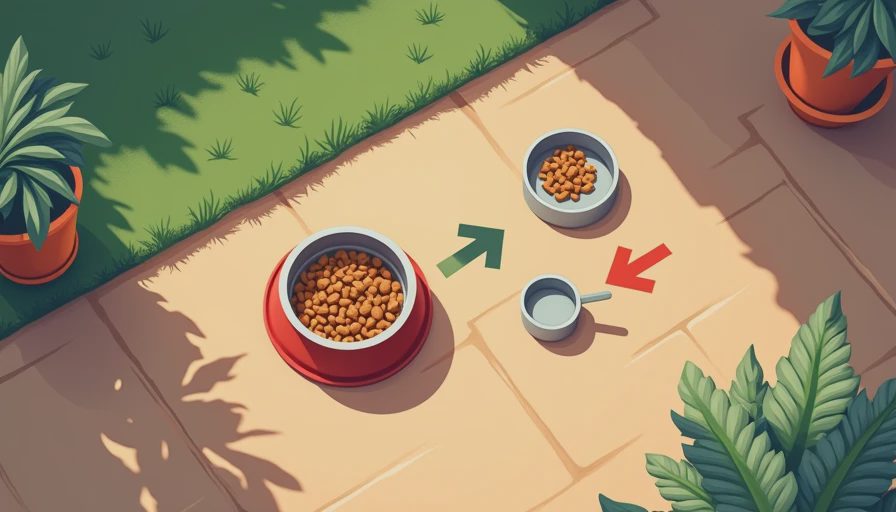
How to switch dog food with a seven-day plan
A gradual transition gives the digestive system time to adjust. For many dogs, a seven-day schedule works well:
- Days 1 and 2: Serve about 75% old food and 25% new food.
- Days 3 and 4: Move to roughly 50% old food and 50% new food.
- Days 5 and 6: Offer about 25% old food and 75% new food.
- Day 7: Serve the new food alone if your dog is eating normally and stools look typical.
Measure the portions rather than estimating by eye. If the new food contains more calories per cup, the same volume could provide too many calories. Feeding guides are starting points, not rigid rules, so watch body condition and appetite over the next few weeks.
Some dogs need longer than seven days. A dog with a sensitive stomach, a history of loose stools, or a very selective appetite may do better with each step lasting three or four days. How to switch dog food safely is less about finishing on a particular date and more about moving at a pace your dog can handle.
Keep treats, table scraps, chewable supplements, and dental products consistent during the transition. If you change five things at once, you will not know which change caused a reaction.
What normal adjustment looks like
A small change in stool softness can happen during a food transition. Mild gas or a temporary drop in excitement at mealtime can also occur, especially when the new food has a different fat level, fiber profile, texture, or smell. These changes should be limited and short-lived, not steadily worsening.
Watch your dog’s stool, appetite, energy, and water intake each day. A quick note on your phone can help: record the amount served, treats given, stool quality, and any vomiting. This simple log is useful if you need to slow down or speak with your veterinarian.
If stools become loose, return to the last ratio your dog handled well for another day or two. You can then try advancing more slowly. Do not respond by adding several home remedies or human medications. Some products that are safe for people can be dangerous for dogs, and diarrhea can have causes unrelated to food.
Not every symptom means an emergency, but repeated vomiting, profuse diarrhea, blood or black stool, painful belly behavior, marked lethargy, dehydration, or a complete refusal to eat warrants prompt veterinary guidance. Puppies, seniors, and dogs with chronic illness may need attention sooner.

How to switch dog food for picky or sensitive dogs
Picky eating is often made worse when a household keeps replacing the bowl after a few bites. Offer the planned meal in a calm location and avoid turning every refusal into a buffet of alternatives. A healthy dog may occasionally eat less during a transition, but prolonged refusal is different from mild pickiness.
For a sensitive dog, keep the recipe as consistent as possible. Switching from chicken-based kibble to a fish-based canned food, adding a new topper, and introducing rich treats all at once can overwhelm the digestive system. If you need a topper, use a small amount and keep it the same throughout the transition. Warm water can improve the smell and soften kibble without adding a new ingredient.
When asking how to switch dog food for a dog with suspected food sensitivity, remember that a true elimination diet is more structured than trying several store foods. Your veterinarian may recommend a hydrolyzed or novel-protein diet and a specific trial period. Extra treats can undermine the results, so ask for a complete list of allowed foods.
Common mistakes that cause trouble
The most common mistake is changing the food overnight because the old bag ran out. If that is unavoidable, feed smaller meals, avoid extras, and monitor closely. Buy the next bag before you are down to the final scoop whenever possible.
Another mistake is comparing cups instead of calories. A dense grain-inclusive kibble and a lighter formula can have very different calorie counts. Follow the new package directions, then adjust based on your dog’s weight trend and body condition. A visible waist and ribs that can be felt under a light layer of fat are useful practical markers, though your veterinarian can assess this more accurately.
Do not assume grain-free means healthier, that a premium price guarantees better results, or that “natural” automatically means complete and balanced. Look for a complete-and-balanced nutritional adequacy statement appropriate for your dog’s life stage. Brand reputation, quality control, and veterinary input can all be more useful than a dramatic front-of-bag claim.
A simple transition checklist
Before starting, buy enough of the new food for the full transition and write down the current daily amount. Confirm whether your dog needs puppy, adult, or senior nutrition. Set aside the old food so the ratios are easy to measure. During the change, keep treats steady, check stools once or twice daily, and slow down if digestion worsens.
After the transition, give the new diet several weeks unless your dog is having a clear adverse reaction. Evaluate appetite, stool quality, energy, coat condition, weight, and overall enjoyment of meals. If the food seems unsuitable, your veterinarian can help choose the next option instead of having you cycle through bags randomly.
Knowing how to switch dog food is really about making one controlled change at a time. A patient schedule, realistic portions, and calm observation usually matter more than finding a trendy formula. If you are unsure where to begin, bring the food labels and your feeding notes to your veterinary team. That small amount of preparation can turn a stressful switch into an ordinary part of caring for your dog.
Frequently asked questions
Can I switch dog food in one day? You can if circumstances leave no alternative, but a gradual change is gentler for most dogs. Use smaller meals and watch for digestive symptoms.
How long should it take to switch foods? Seven days is a common starting point, while sensitive dogs may need two weeks or longer. The right pace is the one your dog tolerates.
Should I add probiotics? Some dogs may benefit from a veterinarian-recommended probiotic, but supplements are not a substitute for a gradual transition or an evaluation of ongoing symptoms.


From readers
Letters
No letters yet.
Be the first to write in. We read everything that arrives, and we answer most of it.