A reliable puppy feeding schedule helps turn a chaotic first few months into a calmer daily rhythm. Puppies need regular meals because their growing bodies use energy quickly, but the right routine is not identical for every dog. Age, adult size, activity, food calories, and health all matter. Let’s make this make sense with a practical starting point you can adjust as your puppy grows.
How often should a puppy eat?
Most puppies do well with three meals a day from about eight weeks through six months of age. Very young puppies, toy breeds, and dogs that seem uncomfortable between meals may need four smaller meals instead. Splitting the daily amount into smaller portions can help reduce frantic eating, stomach upset, and long stretches without food.
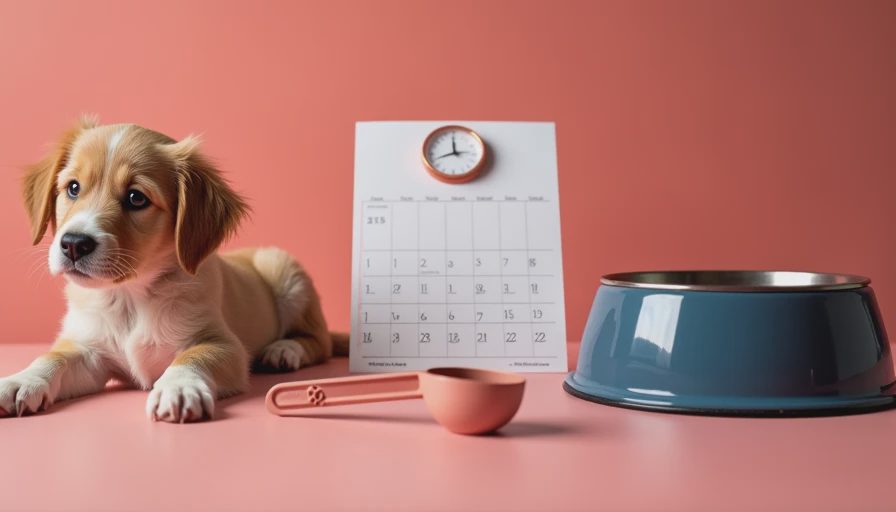
A common puppy feeding schedule begins with breakfast around 7 a.m., lunch near noon, and dinner between 5 and 6 p.m. The exact clock time matters less than keeping the gaps reasonably consistent. If you work away from home, an automatic feeder or a midday visit from a family member or pet sitter can make the routine easier. Do not leave a full bowl down all day unless your veterinarian specifically recommends free-choice feeding.
At around six months, many puppies can move to two meals daily. Some large-breed puppies remain more comfortable on three meals for longer, especially if they eat quickly or have sensitive digestion. Your veterinarian can help you decide when the change makes sense.
How much food does a puppy need?
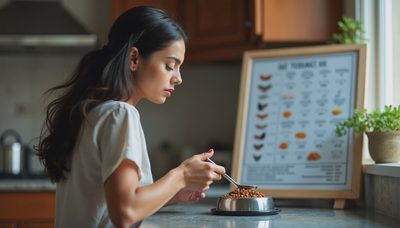
Start with the feeding guide on the puppy food package, using your puppy’s current weight and expected adult size as a reference. These charts are starting points, not perfect prescriptions. Two puppies of the same age can need different amounts, and food brands vary considerably in calories per cup. A puppy eating a calorie-dense formula could need less volume than a puppy eating another recipe.
Measure meals with a standard dry measuring cup, or use a kitchen scale if you want greater consistency. Divide the total daily amount among the meals in the puppy feeding schedule. For example, if the daily recommendation is 1.5 cups and your puppy eats three times, offer one-half cup per meal. Count training treats, dental chews, stuffed toys, and table scraps as part of the day’s intake rather than adding them on top.

Watch body condition instead of chasing a number on the package. You should be able to feel the ribs under a light layer of padding, see a waist from above, and notice a gentle abdominal tuck from the side. Prominent ribs, a round belly that persists, loose stool, or unusually rapid weight gain deserve a conversation with your veterinary team.
Choosing meal times and building good habits
A puppy feeding schedule can support house training when meals happen at predictable times. Take your puppy outside shortly after eating, drinking, waking, and playing. Puppies often need to eliminate within a fairly short window after a meal, though each dog has a different pattern. Keeping a small note on your phone with meal time, water intake, stool, and accidents can reveal useful trends without making you feel like you need to document every breath.
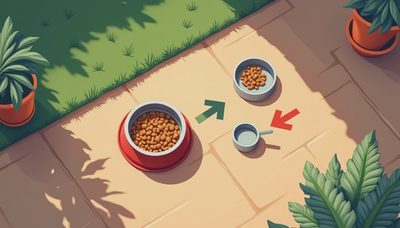
Feed in a quiet spot where children and other pets will not crowd the bowl. Some puppies eat too fast when they feel pressured. A slow-feeder bowl, food puzzle, or hand-feeding part of the meal during training can make eating more purposeful. Introduce these changes gradually. If a puzzle causes frustration, return to a simpler option and try again later.
Fresh water should be available throughout the day. Avoid restricting water just to reduce nighttime accidents; that can leave a puppy dehydrated and does not solve the training problem. Instead, ask your veterinarian whether removing the water bowl shortly before bedtime is appropriate for your individual puppy.
Adjusting the routine as your puppy grows
The puppy feeding schedule should change as your dog’s body and appetite change. Weigh your puppy regularly during growth, particularly during the first several months. A home scale can work for a small dog, while a veterinary clinic can provide a more accurate check for a larger puppy. Look at the trend over several weeks rather than reacting to one measurement.
If your puppy consistently leaves food behind, the portion may be larger than needed, the environment may be distracting, or the puppy may be feeling unwell. Pick up uneaten food after about 15 to 20 minutes and offer the next meal at its normal time. Do not compensate by adding extra treats throughout the day. On the other hand, persistent hunger paired with poor weight gain, diarrhea, vomiting, or a potbellied appearance warrants veterinary advice.
Large-breed puppies need especially careful growth management. Overfeeding can contribute to excessively rapid growth, which can place stress on developing bones and joints. Use a complete and balanced large-breed puppy food when recommended, and avoid adding calcium or other supplements unless your veterinarian prescribes them.
Treats, food changes, and common mistakes
Training is an important part of puppy life, and food rewards are perfectly reasonable. Keep treats small, soft, and easy to chew. You can reserve a portion of the regular puppy food for training, which helps prevent accidental overfeeding. Rich table foods, fatty leftovers, and frequent new snacks can cause diarrhea and make it harder to identify the problem if your puppy becomes sick.
When changing foods, mix the old and new formulas over several days. A gentle transition might begin with about 75 percent old food and 25 percent new food, then gradually increase the new food if stools remain normal. Some puppies need a slower transition. Sudden switches are not always dangerous, but they commonly create avoidable stomach upset.
Avoid making every meal an emotional test. A puppy that skips one meal but remains playful and comfortable may simply be distracted or adjusting to a new home. Repeatedly offering tastier replacements can teach the puppy to hold out for something better. Calmly offer the meal, allow reasonable time, and observe the larger pattern.
When to call the veterinarian
A missed meal deserves closer attention in a very young or toy-breed puppy because small dogs can become unwell more quickly. Contact your veterinarian promptly if your puppy refuses multiple meals, vomits repeatedly, has ongoing diarrhea, seems weak, develops a swollen or painful abdomen, or cannot keep water down. Pale gums, collapse, trouble breathing, or severe lethargy require urgent care.
Bring your feeding notes, food bag or a clear photo of the label, treat information, and a fresh stool sample if requested. Those details can help the veterinary team distinguish a portion issue from parasites, infection, food intolerance, or another health concern. Not every symptom means an emergency, but some do deserve a closer look.
For most households, the best puppy feeding schedule is the one you can follow consistently while monitoring body condition and behavior. Start with measured meals, predictable timing, clean water, and sensible treats. Then make small adjustments based on growth and veterinary guidance. A steady routine supports healthy development without demanding perfection from you or your puppy.
From readers
Letters
No letters yet.
Be the first to write in. We read everything that arrives, and we answer most of it.