
Let’s make this make sense. Soft stool is one of the most common reasons dog owners start searching late at night. The bowl looks wrong, the yard cleanup is messier than usual, and the mind jumps between possibilities: Is it the new treat? The stress of guests? Worms? Something more serious? The sheer number of potential explanations can make a single soft stool feel like a diagnostic emergency.
I’m Claire Whitaker. For more than ten years I worked as a client educator in small-animal clinics around Minneapolis, helping owners sort everyday digestive changes into clearer categories. Soft stool was rarely dramatic on its own. What made it stressful was the uncertainty. This post offers a practical way to think through the common causes—stress, dietary factors, parasites, and other contributors—so you can decide what to monitor at home and when a call to the clinic is the wiser move.
Soft Stool Is a Signal, Not a Diagnosis
Soft stool means the stool has less form than the dog’s usual baseline. It can range from mildly mushy but still shaped to loose and unformed. Frequency, volume, presence of mucus or blood, and the dog’s overall behavior all matter more than any single description.
In clinic conversations I asked owners to describe three things first: how long the change had been present, whether the dog otherwise seemed well, and what had changed in the previous few days. Those three details often narrowed the field faster than a long list of possible diseases.
A one-time soft stool in a bright, eating, energetic dog is frequently tied to something ordinary. Soft stool that persists for several days, worsens, or appears with lethargy, vomiting, or appetite loss belongs in a different category and usually warrants professional input.
Stress as a Common Trigger
Dogs are sensitive to changes in routine and environment. Guests, boarding, moving house, a new baby, construction noise, or even a shift in the owner’s work schedule can produce temporary digestive loosening. The gut and the nervous system are closely linked; what looks like a food problem is sometimes a stress response.
Stress-related soft stool often appears around the time of the disruption and improves when the household settles. The dog usually continues to eat, drink, and act relatively normally otherwise. If you can identify a clear stressor and the stool firms up as the stressor fades, the pattern is reassuring.
This does not mean stress should be ignored. Chronic household tension or repeated boarding can keep the gut unsettled. Addressing the environmental piece—more predictable routines, safe spaces, gradual introductions—often helps more than another food change.
Dietary Causes: The Most Frequent Everyday Culprit
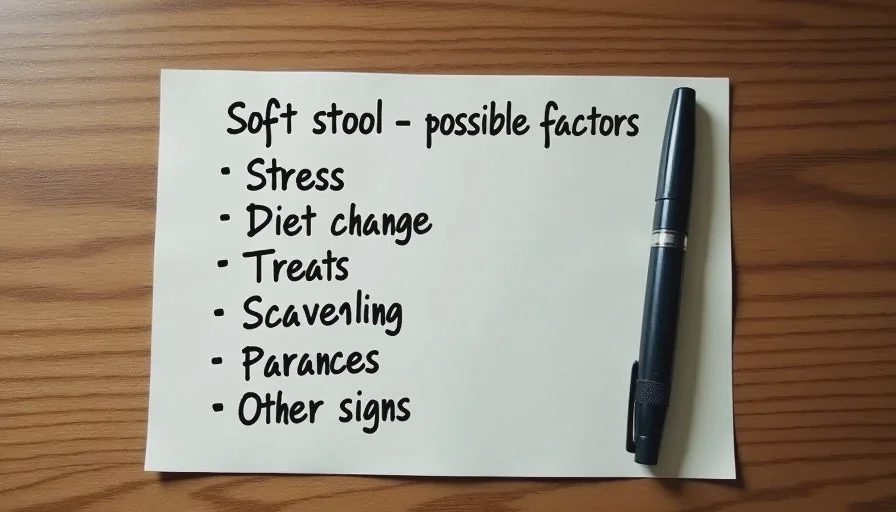
Food-related soft stool is extremely common. Abrupt diet changes, rich treats, table scraps, scavenging on walks, and high volumes of new chews all appear regularly in the history of short-term digestive upset. Even a complete and balanced food can produce soft stool if it is introduced too quickly or if the total load of extras is high.
When dietary factors are suspected, the most useful response is simplification rather than immediate expansion of the ingredient list. Hold the main food steady, reduce or pause treats and extras for several days, and watch the stool. If it firms up, the extras were likely the larger contributor. If it does not, the main diet or another factor may need closer attention.
Owners sometimes cycle through multiple foods looking for the one that will eliminate every soft stool. That approach often prolongs the instability. A period of dietary calm gives clearer information than continuous change.
Worms and Other Parasites
Intestinal parasites can cause soft stool, diarrhea, weight loss, or a dull coat, especially in puppies, recently adopted dogs, or dogs with outdoor exposure. Roundworms, hookworms, whipworms, and giardia are among the more familiar names. However, soft stool alone does not prove parasites are present, and many dogs with soft stool do not have worms.
The reliable way to check is a fecal test performed by a veterinary clinic. Over-the-counter dewormers given without testing can miss certain parasites or create a false sense of resolution. If your dog has not had a recent fecal exam, or if soft stool is accompanied by visible worms, a pot-bellied appearance, or poor weight gain, a clinic visit is the appropriate next step.
Routine preventive care, including regular fecal screening and veterinarian-recommended parasite control, reduces the chance that parasites become the explanation for ongoing digestive issues.
Other Contributors Worth Keeping in Mind
Bacterial or viral gastrointestinal upsets can produce soft stool, often with additional signs such as vomiting or lethargy. These episodes are sometimes self-limiting in otherwise healthy adult dogs, but they can also progress and require supportive care.
Food intolerance or sensitivity may show up as recurrent soft stool when a particular ingredient is present. Confirming this usually requires a structured diet trial rather than informal switching. True food allergy more often involves skin and ear signs, though digestive symptoms can appear.
Medication changes, dietary indiscretion involving garbage or compost, and, less commonly, systemic illness can also affect stool quality. The broader context—age, medical history, concurrent symptoms—helps determine how urgently these possibilities need to be explored.

A Practical Thinking Sequence
When soft stool appears, a calm sequence keeps the response proportional.
First, note the dog’s overall condition: appetite, energy, vomiting, thirst, and attitude.
Second, review the previous 48–72 hours for diet changes, treats, scavenging, stress, or new medications.
Third, decide whether the episode looks isolated and mild enough for short-term home monitoring, or whether red-flag signs call for a prompt clinic contact.
Fourth, if monitoring at home, simplify the diet, keep fresh water available, and record stool consistency and frequency for the next one to three days.
Fifth, if the stool does not improve or if new signs appear, move to professional evaluation rather than adding more home experiments.
This sequence does not replace veterinary judgment. It organizes the information so that judgment can be applied more efficiently.
When to Call Rather Than Wait
Contact the clinic more quickly if the dog is very young, very old, or has existing health conditions; if vomiting accompanies the soft stool; if there is blood in the stool beyond mild streaking; if the dog becomes lethargic or refuses food; if the abdomen seems painful or distended; or if soft stool persists beyond a couple of days despite simplification. Large volumes of watery diarrhea raise the risk of dehydration and deserve earlier attention.
A phone triage conversation is often enough to decide whether an exam is needed the same day or whether continued monitoring is reasonable. You will not be the first owner to call about soft stool, and you will not be overreacting by asking.
The Emotional Load of Uncertainty
Soft stool is visible and messy. It triggers a stronger emotional response than many other mild variations in a dog’s day. Online search results tend to escalate the possibilities quickly, which increases the sense of urgency even when the dog still seems well. Structured observation and a clear threshold for calling help contain that escalation.
You do not need to identify the exact cause in the first hour. You need to know whether the dog is systemically well, what has changed recently, and what will trigger the next step. That level of clarity turns a vague worry into a manageable process.
Bringing the Reasoning Back to Daily Care
Soft stool can stem from stress, dietary indiscretion or change, parasites, infection, or other factors. The most common everyday explanations in otherwise healthy dogs are dietary and stress-related. Parasites and medical causes require testing or examination to confirm. A calm, sequential approach—assess the dog, review recent changes, simplify, monitor, and escalate when needed—prevents both under-reaction and unnecessary panic.
Your dog’s baseline is the most useful reference point you have. Deviations from that baseline, especially when they persist or arrive with other signs, are the signal to act. Most short-term soft stool episodes resolve with time and simplicity. The ones that do not become clearer when you have already gathered the basic history and observations.
Let’s make this make sense. Look at the whole dog, not only the stool. Consider the recent days before assuming the worst or the most complicated explanation. Simplify what you can control. And let the clinic help when the pattern moves beyond what home monitoring can safely answer. That approach keeps the response proportionate and the worry contained.



From readers
Letters
No letters yet.
Be the first to write in. We read everything that arrives, and we answer most of it.