
Let’s make this make sense. Few moments create a quicker spike of worry than finding a pile of vomit on the floor and realizing your dog has thrown up. When it happens only once and the dog otherwise seems like himself, the next question is almost always the same: Do I watch and wait, or do I call the clinic now?
I’m Claire Whitaker. For more than ten years I worked as a client educator in small-animal clinics around Minneapolis, helping owners interpret everyday digestive events. Single episodes of vomiting were among the most common reasons for anxious phone calls and late-night searches. My role was not to diagnose over the phone. It was to help people gather the right details so they could decide whether home monitoring was reasonable or whether professional input was the safer next step.
This post walks through what a single episode often means, which observations matter most in the hours that follow, and how to distinguish a situation that can be watched from one that needs prompt attention.
A Single Episode Is Common—and Still Worth Noticing
Dogs vomit for many ordinary reasons. They may have eaten too fast, swallowed grass, picked up something on a walk, reacted to a rich treat, or simply had a temporary stomach upset. In a large number of cases a single episode is followed by normal appetite, normal energy, and no further vomiting. That pattern is reassuring.
It is not a guarantee. A single vomit can also be the first sign of something that will progress. The difference usually becomes clearer with structured watching rather than with immediate assumption in either direction. The goal is to avoid two equal errors: treating every isolated incident as an emergency, and ignoring early signals that the situation is not resolving.
What to Check Right Away
After the initial cleanup, take a short inventory while the details are fresh.
Is the dog bright, alert, and interested in normal surroundings?
Is there repeated gagging or attempts to vomit again?
Is the abdomen soft or tense when gently touched (only if the dog allows it)?
What did the vomit look like—food, foam, yellow bile, or something else?
Did the dog have access to anything unusual in the past day—new treats, garbage, plants, medications, or toys that could have been chewed?
These details do not replace a veterinary exam when one is needed. They do give you clearer information for the next few hours and for any conversation with the clinic.
If the vomit contains large amounts of blood, material that looks like coffee grounds, or foreign material that suggests something inedible was swallowed, contact the clinic promptly rather than waiting. The same applies if the dog seems painful, lethargic, or distressed.
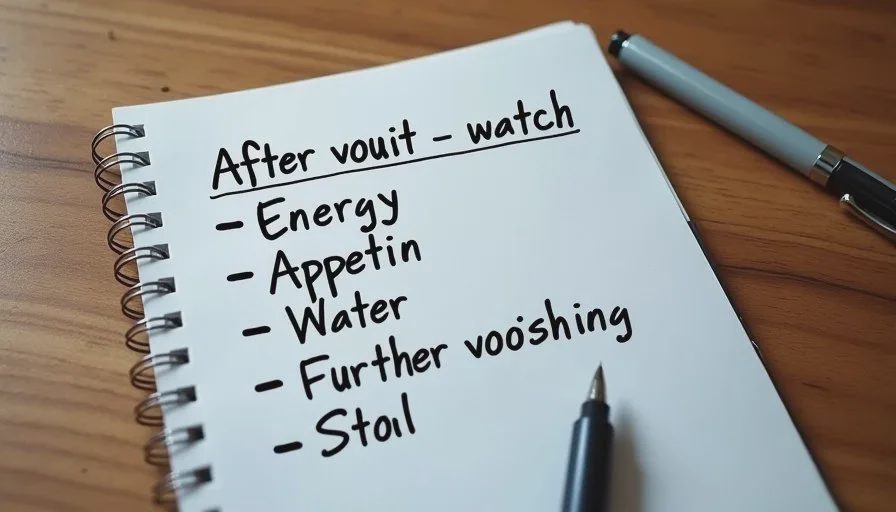
The First Few Hours: A Practical Watch List
When the dog appears otherwise well after one episode, many veterinarians are comfortable with a period of home monitoring, provided red-flag signs stay absent. During that window, keep the observations simple and consistent.
Appetite: Offer a small amount of the regular food or a bland option your veterinarian has previously approved after a few hours if no further vomiting occurs. Note whether the dog is interested.
Thirst: Water is usually appropriate in small amounts. Watch for repeated drinking followed by more vomiting.
Energy: Is the dog moving around the house normally, or is he quieter than usual?
Further vomiting or retching: Any additional episodes change the picture.
Stool: Diarrhea appearing alongside vomiting is worth noting.
Behavior: Restlessness, hiding, or a hunched posture are useful signals.
Writing these down with approximate times prevents the day from blurring together when you later need to describe what happened.
When Waiting Is Reasonable
Waiting is more reasonable when the dog is an otherwise healthy adult, the episode was isolated, the vomit was primarily food or bile without concerning material, and the dog returns to normal energy and interest within a short time. In those cases, a light meal later in the day and continued observation overnight often provide the reassurance that the event was temporary.
Even then, keep the threshold for calling low. You know your dog’s baseline. If something feels off beyond the single vomit—if energy is lower, if appetite does not return, if the dog seems uncomfortable—let the clinic help you interpret it. A phone triage conversation is not an overreaction.
When to Call Sooner
Certain combinations raise the priority of professional input.
Repeated vomiting within a short period
Vomit that contains frank blood or material resembling coffee grounds
Known or suspected ingestion of a toxin, foreign object, or medication
Distended or painful abdomen
Lethargy, weakness, or collapse
Puppies, senior dogs, or dogs with existing medical conditions
Concurrent severe diarrhea, especially with blood
Inability to keep water down
Large-breed deep-chested dogs carry additional concern for gastric dilatation-volvulus when vomiting and abdominal distension appear together. In those cases prompt veterinary evaluation is the safer path.
This list is not exhaustive. It is a practical set of triggers that, in clinic experience, justified moving from home watching to professional assessment without delay.
Food, Water, and the Rest of the Day
If you and your veterinarian decide monitoring at home is appropriate, keep the rest of the day’s inputs simple. Avoid new treats, chews, or table food. A short pause before offering a small amount of regular or previously approved bland food helps you see whether the stomach has settled. Return to the normal routine gradually once appetite and energy look steady.
Do not administer over-the-counter medications unless your veterinarian has specifically directed you to do so for this dog. Human products and even some pet products can complicate the picture or create new risk.

The Emotional Side of the Wait
I want to name the discomfort that sits under these decisions. Cleaning up vomit is unpleasant. The silence that follows while you watch for a second episode is tense. Online searches often escalate the fear faster than they provide useful filters. Many owners feel they are either overreacting or underreacting, with no clear middle ground.
Structured observation is the middle ground. You are not ignoring the event. You are collecting the information that makes the next decision better. Setting a defined window—several hours, or overnight if the dog remains bright—and deciding in advance which signs will trigger a call reduces the sense of open-ended uncertainty.
What I Saw When Single Episodes Became Patterns
In follow-up conversations, some dogs that vomited once went on to have occasional isolated episodes tied to eating too fast or scavenging. Others developed a more frequent pattern that eventually needed dietary adjustment or further investigation. The difference was rarely visible in the first event alone. It became visible through the notes owners kept and the consistency of the dog’s baseline between episodes.
If single vomiting events begin to cluster—more than once a month, for example, without an obvious trigger—it is worth a non-urgent conversation with the clinic. Patterns are easier to evaluate than isolated surprises.
Bringing the Decision Back to the Moment
When your dog throws up once, the most useful immediate steps are practical: clean up, note the details, check the dog’s overall demeanor, and decide whether the situation fits a monitoring window or a prompt call. Most isolated episodes in otherwise well dogs resolve without incident. Some do not. The only way to tell is to watch with intention and to keep the threshold for professional input appropriately low.
You do not need to diagnose the cause in the first hour. You need to know what you are seeing and what would change your next move. That level of clarity turns a moment of panic into a manageable sequence.
Let’s make this make sense. One vomit is information. What happens in the hours afterward is more information. Use both, stay in touch with your clinic when the picture is unclear, and let the dog’s actual condition—not the loudest online scenario—guide the response.


From readers
Letters
No letters yet.
Be the first to write in. We read everything that arrives, and we answer most of it.