
Let’s make this make sense. Changing a dog’s food looks simple on the surface. You buy the new bag, mix it with the old, and wait for the switch to finish. In practice, many household transitions produce soft stool, temporary refusal, or a few days of worry that could have been reduced with a slower, more deliberate approach.
I’m Claire Whitaker. For more than ten years I worked as a client educator in small-animal clinics around Minneapolis, helping owners plan food changes that stayed readable and relatively comfortable for the dog. My role was not to choose the food for them. It was to give them a clear sequence so the transition itself did not become the problem.
This post lays out a practical step-by-step method for switching dog food, including how to pace the mix, what to hold steady, and how to interpret the signals that appear along the way.
Why Gradual Transitions Matter
A dog’s digestive system adapts to the current diet. The bacteria, enzyme patterns, and gut motility that handle one formula need time to adjust to another. When the change is abrupt, the most common result is soft stool or diarrhea. Owners then often blame the new food and switch again, which restarts the disruption.
A gradual transition gives the gut time to adapt while still moving toward the new formula. It also creates a clearer experiment. If stool quality declines only at a certain mixing ratio, you have information. If the dog refuses the new food early, you can slow down rather than force the issue. Abrupt switches erase that information and replace it with guesswork.
Most healthy adult dogs do well with a transition spread over seven to ten days. Dogs with a history of sensitive digestion, very young or senior dogs, and dogs with existing gastrointestinal conditions often benefit from an even longer window.
Before You Start: Three Preparations
First, confirm the new food is appropriate for the dog’s species, life stage, and any known dietary needs. A complete and balanced formula for adult maintenance is not automatically right for a growing puppy or a dog with a prescribed therapeutic diet.
Second, buy enough of the current food to finish the transition. Running out of the old food halfway through forces an abrupt finish that undoes the benefit of the slow start.
Third, decide what will stay constant. Treats, chews, table food, and supplements should remain as steady as possible during the switch. Changing multiple variables at once makes it impossible to know what caused any digestive change.
The Basic Mixing Schedule
A widely used progression looks like this:
Days 1–2: 75% current food, 25% new food
Days 3–4: 50% current food, 50% new food
Days 5–6: 25% current food, 75% new food
Days 7 onward: 100% new food
This is a starting framework, not a rigid prescription. Some dogs move through it comfortably. Others need each stage extended to three or four days. If soft stool appears at a particular ratio, holding at the previous stage for an extra couple of days and then progressing more slowly is often more effective than pushing forward on schedule.
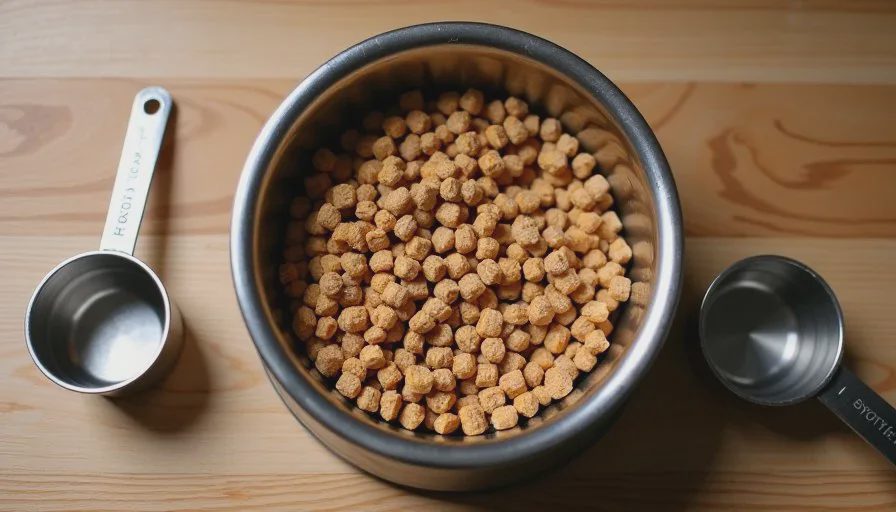
Measure both foods by weight or by consistent volume so the percentages stay accurate. Eyeballing portions tends to drift, especially when the two foods have different densities.
What to Watch During the Transition
Daily observation turns the process from hopeful waiting into useful feedback.
Stool consistency is the most obvious marker. Mild softening that improves within a day or two at a given stage is common. Persistent loose stool, mucus, or frank diarrhea is a signal to pause progression and, if it continues, to consult your veterinarian.
Appetite matters. Some dogs notice the new flavor or texture immediately and eat with enthusiasm. Others are cautious. A temporary dip in interest is not always a crisis, but complete refusal for more than a meal or two deserves attention. Mixing more thoroughly or warming the food slightly (if appropriate for the formula) can help some picky dogs accept the change.
Energy, gas, and any vomiting should also be noted. A single mild episode in an otherwise bright dog may not require stopping the transition. Repeated vomiting or a clear drop in energy does.
Keep a simple log with dates, mixing ratios, and observations. It prevents the week from blurring together and gives your veterinarian useful detail if problems arise.
Adjusting the Pace for Sensitive Dogs
Dogs that have produced soft stool with previous food changes often need a longer runway. Extending the entire transition to ten to fourteen days, or even longer, reduces the chance of a dramatic reaction. Some owners find it helpful to move in smaller percentage jumps—10% or 15% every two to three days—rather than the larger steps listed above.
If the dog has a known history of digestive sensitivity, ask your veterinarian whether a specific transition plan or a temporary digestive support product is appropriate. Do not add new supplements on your own during the switch unless you have prior guidance; they become additional variables.
Handling Refusal or Strong Preference
Some dogs dig out the familiar food and leave the new. Others stop eating until the ratio becomes more favorable to them. In these cases, slowing the progression and ensuring the two foods are well mixed can help. Offering the mixed meal when the dog is genuinely hungry—after a walk or at a consistent mealtime—also improves acceptance for many.
Avoid turning the meal into a prolonged negotiation with continuous toppers and extras. Those additions change the nutritional profile and make the transition harder to evaluate. If refusal persists beyond a couple of days despite a slower pace, contact the clinic rather than forcing the issue or abandoning the new food without a plan.

After the Transition: The Evaluation Window
Once the dog is eating 100% of the new food, continue watching for another one to two weeks before declaring the switch a success or failure. Stool quality, appetite consistency, energy, coat condition, and body weight all provide information. Some adjustments in digestive adaptation continue after the old food is gone.
If the new food ultimately does not suit the dog—persistent soft stool, declining coat, unwanted weight change, or ongoing low appetite—a further change may be needed. Apply the same gradual method rather than an abrupt swap. The goal is always a readable process, not a rapid series of experiments.
Common Mistakes That Undermine the Process
Switching over two or three days because the bag or a quick tip suggested it was enough. For many dogs it is not.
Changing treats, chews, or adding a new supplement at the same time as the main food. The resulting soft stool then has multiple possible causes.
Judging the new food on day two of a 25% mix. That stage is still dominated by the old formula; it is too early for a verdict.
Running out of the old food and finishing the transition overnight. The careful early stages lose their value.
Treating every soft stool as proof that the new food is wrong rather than as a signal to slow down. Many transitions produce temporary softening that resolves when the pace is adjusted.
Special Situations
Puppies, senior dogs, and dogs with medical conditions may need individualized plans. A puppy’s higher caloric needs and still-maturing gut can make transitions more delicate. A senior dog may have reduced digestive resilience. A dog on a prescription diet should not be switched without veterinary direction. In all of these cases, the clinic is the right source for a tailored schedule.
Multi-dog households add logistics. If only one dog is changing foods, feeding separately during the transition prevents the other dog from eating the new mix and keeps portions accurate.
Bringing the Steps Back to the Bowl
Changing a dog’s food step by step is less about a perfect schedule and more about controlled, observable progress. Start with a clear plan, keep other variables steady, move in measured stages, and let stool, appetite, and energy guide the pace. Extend the timeline when the dog needs it. Hold steady when the signals are mixed. Evaluate only after the transition is complete and a further observation window has passed.
You do not need to rush. A transition that takes twelve days and produces minimal digestive drama is more successful than one that takes four days and leads to a week of soft stool and second-guessing. The dog’s comfort and the clarity of the information you gather both matter.
Let’s make this make sense. Measure the mix. Watch the response. Adjust the speed rather than the entire plan at the first soft stool. That approach turns a common source of household stress into a manageable, readable process.

From readers
Letters
No letters yet.
Be the first to write in. We read everything that arrives, and we answer most of it.