
Let’s make this make sense. Slow feeders and puzzle-style bowls have become a standard recommendation for dogs that eat too fast and, increasingly, for cats as well. The promise is straightforward: slower intake, less gulping, better digestion, and a bit of mental engagement. Many households buy one, use it for a week, and then wonder whether the improvement justified the cost and the extra washing. Others find the tool genuinely changes mealtime for the better.
I’m Claire Whitaker. For more than ten years I worked as a client educator in small-animal clinics around Minneapolis, helping owners match everyday tools to actual problems. Slow feeders came up often—sometimes as a helpful solution for gulping and regurgitation, sometimes as an unused item that joined the collection of pet products that promised more than they delivered. This post looks at what slow feeders can realistically do, where they fall short, and how to decide whether one belongs in your routine.
What Slow Feeders Are Designed to Do
A slow feeder is any bowl or insert that uses ridges, mazes, obstacles, or compartments to make it harder for a dog or cat to swallow large amounts of food quickly. The basic goals are to extend meal duration, reduce the volume swallowed in each gulp, and, in some designs, add a layer of problem-solving.
For dogs that regularly finish a full bowl in under a minute, the change can be noticeable. Meals that once lasted thirty seconds stretch to five or ten minutes. Regurgitation right after eating often decreases when the food arrives in the stomach more gradually. Some dogs also show less restlessness around mealtime once the frantic pace is interrupted.
For cats the picture is more mixed. Some cats engage readily with shallow puzzle trays or food-dispensing toys. Others treat the obstacles as an annoyance and walk away, especially if the design makes wet food messy or difficult to extract.
The Digestive Benefit Is Real—but Not Universal
Gulping air along with food is a common contributor to regurgitation and discomfort in fast eaters. Slowing the rate of intake reduces that air swallowing for many dogs. Soft stool linked purely to rapid eating can also improve when the meal is paced. These are practical, observable changes rather than dramatic medical claims.
The benefit is largest for animals whose main problem is speed. If the digestive issue stems from food intolerance, abrupt diet changes, or underlying disease, a slow feeder will not address the root cause. It is a pacing tool, not a treatment for every form of stomach upset.
I encouraged owners to define the specific problem before buying. “He eats too fast and sometimes brings it back up” is a clearer rationale than “I heard slow feeders are better.” Clarity about the target makes it easier to judge whether the product is working.
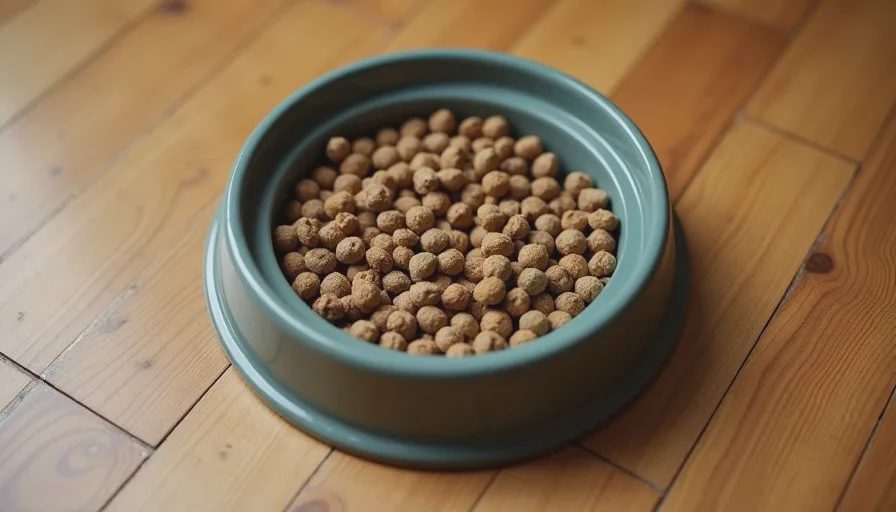
Mental Engagement Versus Frustration
Many slow feeders are marketed with an enrichment angle. The idea is that working for food satisfies natural foraging instincts and reduces boredom. For some dogs this is accurate. A well-designed puzzle can turn a routine meal into a short activity that leaves the dog more settled afterward.
For other dogs—and many cats—the same design produces frustration rather than engagement. If the food is too difficult to extract, if the ridges trap kibble in ways that require constant pawing or nose-pushing without much reward, or if the animal is simply hungry and impatient, the feeder can increase stress around meals. Cats in particular may abandon the effort and wait for a human to intervene.
The difference often comes down to matching difficulty to the individual. A shallow maze that adds a minute or two of effort is more likely to succeed than a complex multi-level puzzle introduced on day one. Starting easy and increasing challenge only if the animal stays interested prevents the tool from becoming a barrier to eating.
Practical Household Considerations
Slow feeders add a daily cleaning step. Ridges and crevices trap food, especially wet food or moistened kibble. Households that already struggle to keep bowls clean may find the extra scrubbing unsustainable. Dishwasher-safe designs help, but not every product is equally easy to maintain.
Size and stability matter. A lightweight plastic feeder that slides across the floor while a large dog eats creates its own problems. Rubber bases or heavier materials reduce the sliding. For cats, a feeder that is too deep or unstable can simply be ignored.
Cost ranges widely. Basic ridged inserts are inexpensive. Elaborate interactive puzzles cost more and are not automatically more effective. The most useful purchase is the simplest design that reliably slows the meal without creating new frustrations or cleaning burdens.
Alternatives That Cost Less or Work Alongside
Not every fast eater needs a commercial slow feeder. Spreading dry food across a clean flat surface or baking sheet forces the animal to move and pick up individual pieces. A muffin tin with kibble divided into the cups achieves a similar effect for many dogs. For cats, placing small portions in several shallow dishes around a quiet room can slow intake and add light movement.
These methods are not as tidy as a single bowl, and they are less practical for wet food. They do demonstrate that the core principle—increasing the work required to finish the meal—can be achieved without a specialized product. Some households use a simple homemade approach most days and reserve a commercial feeder for times when convenience matters more.
Hand-feeding a portion of the meal is another low-tech option for dogs that tolerate it. It dramatically slows intake and adds interaction. It is time-consuming and not realistic for every schedule, but it can serve as a temporary measure while evaluating whether a feeder is worth the investment.

How to Test Whether a Slow Feeder Is Worth It
A practical trial keeps the decision grounded in results rather than hope.
Define the target problem: regurgitation after meals, finishing in under a minute, or high restlessness around food.
Choose a simple, appropriately sized design that matches the food type you actually use.
Introduce it at a low difficulty level so the animal can succeed.
Track meal duration, any regurgitation, stool quality, and the animal’s willingness to engage over one to two weeks.
Notice the cleaning time and whether the household consistently uses the feeder.
If meal duration increases, regurgitation decreases, and the animal continues to eat without visible frustration, the feeder is doing useful work. If the animal avoids it, if cleaning becomes a daily source of irritation, or if the original problem remains unchanged, the product is less likely to earn permanent space in the routine.
Common Reasons Slow Feeders Fail in Real Homes
The design is too difficult for the individual animal, leading to abandonment of the meal.
Wet food becomes trapped and messy, creating hygiene and acceptance problems.
The feeder is introduced at the same time as a new food, so any digestive change is hard to attribute.
Multiple pets compete for the feeder, turning mealtime into a resource scramble.
The household stops using it after the novelty fades because the extra steps feel burdensome.
Most of these failures are preventable with a slower introduction, realistic expectations, and a willingness to stop if the tool is not helping.
Bringing the Decision Back to Your Kitchen
Slow feeders are worth buying when a specific, observable problem—rapid gulping, post-meal regurgitation, or extreme mealtime speed—improves with their use, and when the design fits the animal and the household’s cleaning capacity. They are less worth buying when the purchase is driven mainly by general enrichment trends or when the animal finds the obstacles more frustrating than engaging.
You do not need the most complex puzzle on the market. You need a tool that reliably slows the meal, stays in use, and does not create new problems. For some dogs and a smaller number of cats, a well-chosen slow feeder becomes a quiet, permanent part of the daily routine. For others, simpler pacing methods or no special feeder at all prove more sustainable.
Let’s make this make sense. Identify the actual problem. Match the tool to the animal. Test it long enough to see real results. And keep the ones that earn their place while letting the rest go. That approach turns a popular product into a practical decision rather than another hopeful addition to the pet cupboard.


From readers
Letters
No letters yet.
Be the first to write in. We read everything that arrives, and we answer most of it.